Showing posts with label Tech-News. Show all posts
Showing posts with label Tech-News. Show all posts
Know Your Mobile Number
How building a library of brains could save lives
A library is being assembled in San Diego with the help of some 300 brain donors; people from all walks of life, some of whom are healthy and some of whom have life-threatening brain disorders.
 The patients undertake a series of tests during the course of their lives – and then donate their brains when they die. Slices of their brain are scanned and the images are digitally preserved, allowing doctors to search for clues to both neurological diseases and the secrets behind human longevity.
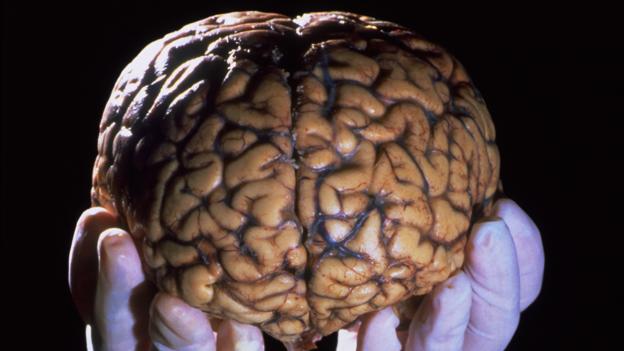 The patients undertake a series of tests during the course of their lives – and then donate their brains when they die. Slices of their brain are scanned and the images are digitally preserved, allowing doctors to search for clues to both neurological diseases and the secrets behind human longevity.
The Brain Observatory’s founder, Dr Jacopo Annese, says the library’s wealth of information could also help doctors discover the telltale signs of serious brain illnesses long before they actually appear.
IBM seeks app developers to harness Watson
IBM has challenged developers to come up with ways to get the vast brain of its supercomputer Watson on to the world's mobile phones.
Watson is an artificially intelligent computer system capable of answering questions posed in natural language.
It also has access to 200 million pages of information, drawn from books, encyclopaedias and other databases.
 Apps could include more advanced Siri-like voice recognition systems or tools that can accurately translate text.
"The power of Watson in the palm of your hand is a game-changing proposition, so we're calling on mobile developers around the world to start building cognitive computing apps infused with Watson's intelligence," said Mike Rhodin, senior vice president of IBM Watson Group.
Medical help
The competition is the latest attempt from IBM to launch Watson as a viable business. It has invested $1bn (£601m) in the system and late last year announced that it would open it up to developers.
To date, more than 1,500 individuals and organisations have been in touch to suggest apps. Three intend to go to market this year, including an app to transform how consumers shop and one to help hospitals better procure devices.
The Watson Mobile Developer Challenge begins on 31 March when developers can submit ideas. Later in the year, IBM will select 25 finalists to turn their ideas into working software.
Other potential Watson-powered mobile apps could include medical ones to help doctors and patients sift through vast amounts of data.
Medical information doubles every five years and Watson can analyse vast amounts to allow doctors to offer patients more treatment options as well as help researchers make medical breakthroughs.
Already Watson is being used by doctors and nurses at the Memorial Sloan-Kettering Cancer Center, in New York, to help make decisions about lung cancer treatment at the hospital.
According to IBM Watson's business chief Manoj Saxena, 90% of nurses who use Watson now follow its guidance.
In the field of education, IBM envisages teachers being able to tap into Watson to identify individual pupil's needs and offer bespoke learning packages for each child.
Trivia king
Watson has got smaller and faster over the years. What started as a system the size of a bedroom is now the size of three stacked pizza boxes. It is also available via the cloud, meaning it can be accessed from anywhere.
It can process 500 gigabytes of information - equivalent to a million books - every second.
And it has proved its abilities. In 2011 it appeared on the Jeopardy game show answering general knowledge questions, without being connected to the internet.
Pitted against the two biggest winners of the trivia quiz show, despite a few stumbles it eventually walked away with the $1m prize.
'Contagious' wi-fi virus created by Liverpool researchers
A computer virus that can spread via wi-fi like a "common cold" has been created by researchers in Liverpool.
In densely populated areas with lots of wi-fi networks, the virus can go from network to network finding weaknesses.

Once in control of a wi-fi access point, it leaves computers on the network extremely vulnerable.
The team's lead researcher told the BBC it was working on software to prevent such attacks being possible.
"Rather than rely on people to use strong passwords, you want to integrate intrusion detection systems to the access points," said Alan Marshall, professor of communication networks at the University of Liverpool.
He would not go into detail about the methods in order to prevent the attack being used on real victims but said a proof-of-concept attack had been developed at the university.
'Under control'
The virus, dubbed Chameleon, seeks out wi-fi access points - devices that transmit the wi-fi signal, found in many homes - that have not had their admin password changed.
This password is different from the one used to log on to the wi-fi network itself, and is often left unchanged from the default setting.
Once an access point is under a hacker's control, new firmware can be installed.
"So it's now under our control," explained Prof Marshall.
"Once you do that you can then do other things with it. You can recover passwords, steal data - anything you want."
Spreading out
But it is the next step of the virus that is most unusual.
Once installed on one access point, the virus can - without being controlled by a human - automatically seek out other vulnerable access points, taking them over as and when they are found.
Prof Marshall told the BBC that this was unlikely to be a threat to big business wi-fi networks, which should have enhanced security in place.
However, networks in homes, or at small premises like coffee shops, are typically found with less stringent protection measures in place.
Now that his team has demonstrated the threat, Prof Marshall said attention would turn to creating a product that could be installed in wi-fi access points to prevent this kind of hijacking - without requiring the user to take responsibility.
Apple issues fix to reported OS X security hole
Apple has issued a fix to a flaw in its OS X operating system which previously left users vulnerable to security breaches while browsing online.
A software update was released last week to iPhone, iPad and iPod owners to protect users from "an attacker" who may "capture or modify data".
It was later discovered that the problem also existed on Apple laptops and desktop computers running OS X.
 On Tuesday, Apple issue a security fix through its software update service.
The problem was first spotted on Apple's mobile devices which run the iOS 7 operating system. It related to the way secure connections are made between Apple's safari browser and websites, including banking sites, Google and Facebook.
These sites have digital security certificates that allow an encrypted connection to be established between a user's computer and the website. This means any data that is sent over the connection should be secure.
Dropped the ball
However, a vulnerability in the code for Apple's iOS and OS X operating systems meant the security certificates were not being checked properly. This meant hackers could impersonate a website and capture the data that was being sent over the connection before letting it continue its journey to the real website.
Apple released a fix for mobile devices running iOS 7 last week but a spokesperson issued the following statement about OS X: "We are aware of this issue and already have a software fix that will be released very soon."
The fix was released on Tuesday.
According to researchers the security flaw had existed for months but no-one had reported it publicly.
Graham Cluley, a security analyst, said it was a failing by the company that it had not been identified earlier.
"It's pretty bad what Apple have done, they've seriously dropped the ball. How much the problem has been exploited is hard to say. Hackers may now be trying to take advantage while users wait for the security fix."
UK spies 'intercepted webcam images of Yahoo users'
Yahoo denied prior knowledge of the alleged programme, describing it as a "completely unacceptable" privacy violation.
According to leaked documents, sexually explicit images were among those gathered - although not intentionally.
.jpg) |
| Almost 2 million users' images were stored in a six-month period, the report said |
The operation, which was called Optic Nerve and was aided by the US National Security Agency, is alleged to have stored images between 2008 and 2010. In one six-month period in 2008, images from 1.8m users were gathered.
The report originated from documents leaked by whistleblower Edward Snowden.
It suggested that sexually explicit content would be captured by the system.
"Unfortunately … it would appear that a surprising number of people use webcam conversations to show intimate parts of their body to the other person," it read.
"Also, the fact that the Yahoo software allows more than one person to view a webcam stream without necessarily sending a reciprocal stream means that it appears sometimes to be used for broadcasting pornography."
'Whole new level'
"We were not aware of nor would we condone this reported activity," Yahoo said in an emailed statement.
"This report, if true, represents a whole new level of violation of our users' privacy that is completely unacceptable and we strongly call on the world's governments to reform surveillance law consistent with the principles we outlined in December.
"We are committed to preserving our users' trust and security and continue our efforts to expand encryption across all of our services."
A statement from GCHQ said it would not comment on matters of intelligence, but added: "All of GCHQ's work is carried out in accordance with a strict legal and policy framework which ensures that our activities are authorised, necessary and proportionate, and that there is rigorous oversight, including from the secretary of state, the interception and intelligence services commissioners and the Parliamentary Intelligence and Security Committee.
"All our operational processes rigorously support this position."


